Schengen EES 2026: Your First Trip Through Europe's New Biometric Border (Indian Guide)
Last reviewed: 10 September 2026 · Verified against current VFS Global India fees
Europe stopped stamping passports in April 2026. A field guide for Indian travellers — exactly what happens at the gate, gate to gate, and why it's faster than you think.


Europe stopped stamping passports. Here's your first trip through the new border.
A machine now reads your face and fingerprints instead of an ink stamp. It sounds scary. It's actually faster. Here's exactly what happens — gate to gate.
Picture this. You land in Frankfurt after nine hours in the air. You shuffle toward the border, passport open, ready for that satisfying ink stamp — proof you made it. But the stamp never comes. Instead a screen lights up, a small camera studies your face, and a glass pad asks for your fingers.
Welcome to the new Europe. This is EES — the Entry/Exit System. Since 10 April 2026, it has replaced the passport stamp at every Schengen border, across all 29 countries. If you're flying to Europe this year, here is your field guide. No jargon — just what happens, step by step.
The ink stamp is dead. For decades, a border officer stamped your passport by hand. It was slow, easy to fake, and hopeless at tracking your days. EES replaces it with a quick digital record of every entry and exit. No ink. No guessing.
01 At the gate, step by step
The very first time you enter Europe after April 2026, four small things happen. Together they add only a few minutes:
Passport scan
The officer scans your passport — the one with your valid Schengen visa inside.
Four fingerprints
You rest four fingers on a glass scanner. Quick and painless.
A photo
A camera captures your face. That's your digital identity for Europe now.
You're in
Your entry is saved to the system. You walk through. Done.
✓ The 3-year shortcut
Here's the payoff. Your fingerprints and photo are stored for three years. On every trip within that window, the machine just verifies you in seconds — no fingerprints again. The first trip is the slow one. After that, you glide.
02 Wait — does this change my visa?
This is the question everyone panics about, so let's be crystal clear: No. You still need a Schengen visa, exactly as before.
The one line to remember
EES is a border check, not a visa. You apply for and win your Schengen visa first — the normal way. EES only happens later, at the airport, after you already hold the visa. It does not decide who gets in. If your visa is refused, EES never even enters the picture.
03 The trap nobody warns you about
⚠ Overstay is now automatic to catch
The old stamp let people fudge their days. EES doesn't. It counts automatically — the rule is 90 days in any 180 days. Overstay by even one day and the system flags it instantly. That can mean fines, removal, and a ban on future trips. Count your days like your trip depends on it. Because it does.
04 And ETIAS? Not your problem
You may have heard scary talk about "ETIAS" too. Relax — it's not for you. ETIAS is a travel permit for people from visa-free countries. Since Indians already need a full Schengen visa, ETIAS does not apply to Indian passport holders. One less thing to worry about. Only EES affects you, and only at the gate.
- ✓ Carry the passport that holds your valid Schengen visa.
- ✓ On your first trip, reach the airport 2–3 hours early for EES registration.
- ✓ If asked, pre-register on the official "Travel to Europe" app.
- ✓ Track your days — stay within 90 in any 180. Never overstay.
The border is the easy part. The visa isn't.
EES takes minutes. Getting the Schengen visa is where Indians get refused. Let a licensed consultant build your file the right way.
Quick questions
Do I still need a Schengen visa with EES?
Yes. EES does not replace the visa. You get the visa first; EES only records entry and exit at the border.
Do I give fingerprints every time?
No. They're saved for three years. Later trips just verify you quickly.
Does ETIAS apply to Indians?
No. ETIAS is for visa-free travellers. Indians need a visa, so ETIAS doesn't apply to you.
Will EES slow me down?
The first trip adds a few minutes. After that, entry is faster.
Need help?
We'll handle your visa file end-to-end.
Documents, VFS slots, embassy filing — by a licensed consultant.
We answer within 5 minutes

Written by
Sherbir Singh GrewalDirector, Pro Lifeset Overseas Pvt Ltd · B.Tech, Information Technology (2007)
Sherbir Singh Grewal supports applicants across visa-file preparation, document organisation and case coordination. His approach is practical: understand the applicant's real situation first, then build the documents around a consistent, believable story.
Full profileRelated Guides

Which Schengen Country to Apply Through from India
Learn the Schengen main-destination rule and discover which country to apply through from India for your visa application.
Read guide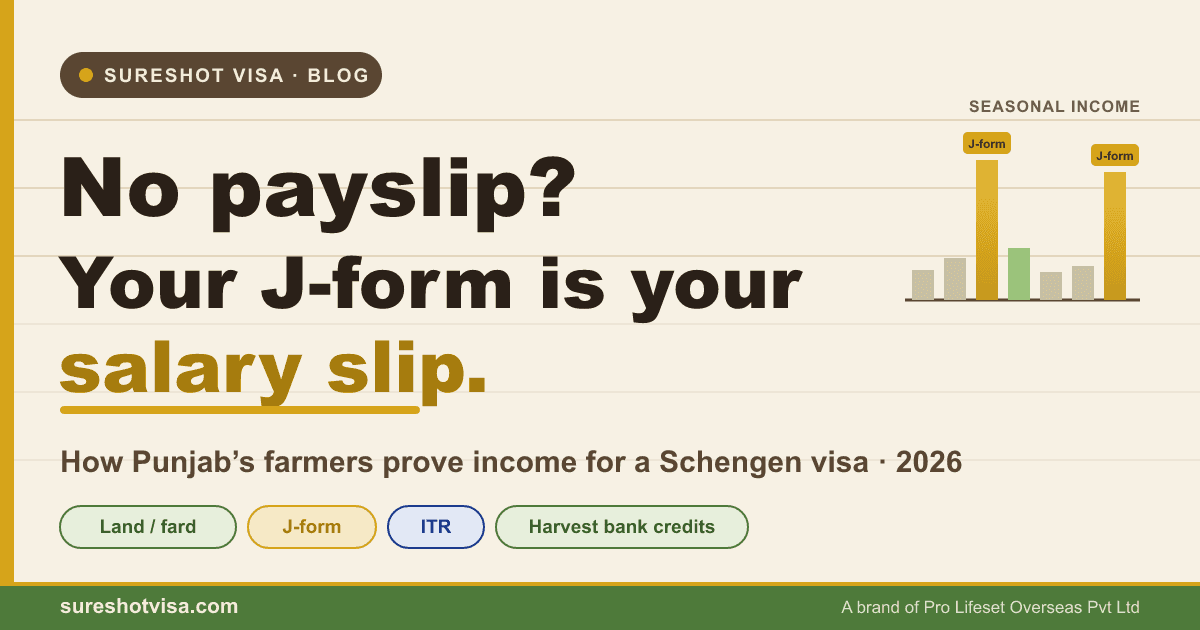
No Salary Slip? How Punjab’s Farmers Prove Income for a Schengen Visa (2026)
A farmer has no salary slip — and still gets the visa. Your J-form, fard, and harvest-season bank credits ARE your income proof. How to build a money story an officer trusts.
Read guide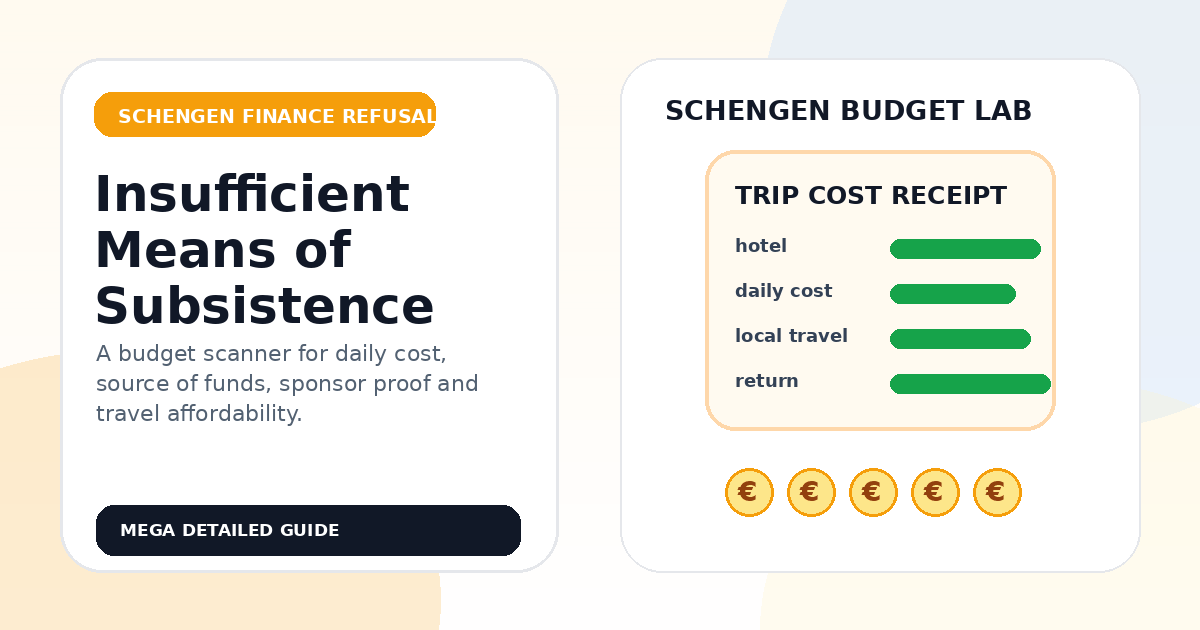
Schengen Visa Refused — Insufficient Means of Subsistence: The Budget Lab
Schengen visa refused for insufficient means? A finance guide for Indians: trip-budget table, bank-statement credibility, sponsor proof, affordability and how to reapply.
Read guide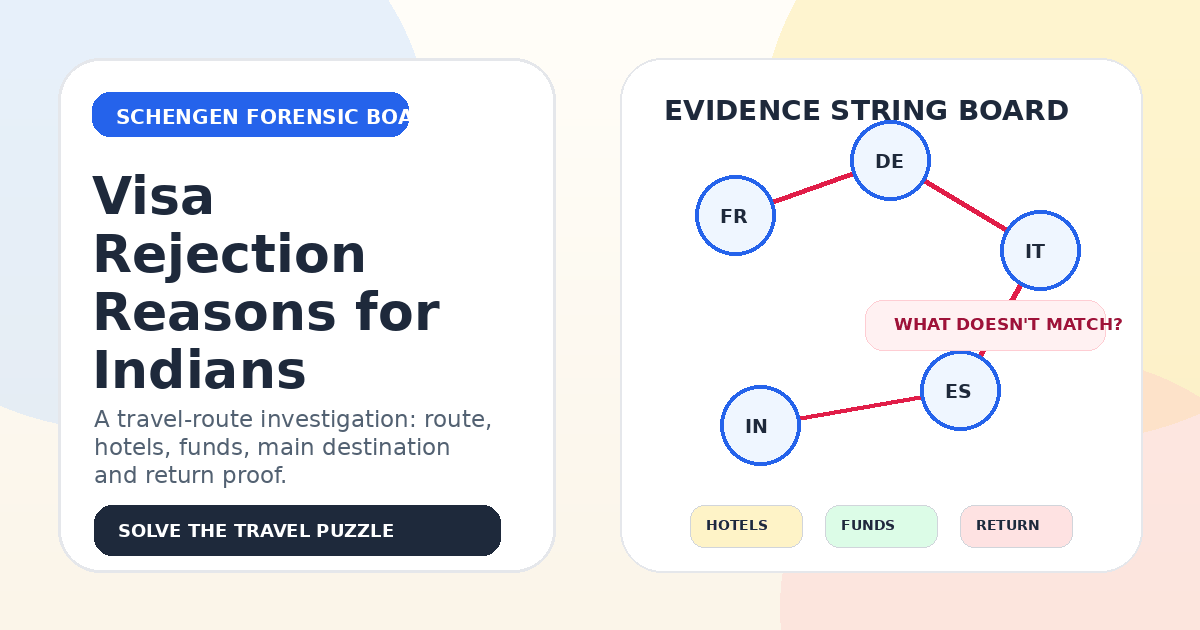
Schengen Visa Rejection Reasons for Indians: The Travel Evidence Board
Schengen visa rejected? A forensic visual guide for Indian applicants — main-destination logic, the refusal-code decoder, hotel-night and funds checks, return proof and a reapply self-audit.
Read guide