Schengen Visa Refused? The 9 Article 32 Codes & Real Fixes (2026)
Last reviewed: 10 September 2026 · Verified against current VFS Global India fees
About 1 in 7 Indian applicants is refused a Schengen visa. Every refusal letter ticks one of 9 Article 32 boxes — codes most agents never decode. We explain each box, the real fix, the 5-year VIS record, and whether to appeal or reapply.


Schengen Visa Refused? The 9 Article 32 Codes — Decoded, with Real Fixes (2026)
The WhatsApp message arrived at 11:47 PM.
"Sir, they refused. Box 13 was ticked. What does that mean? My flight is in 11 days."
Anita had applied for a Germany Schengen visa for her daughter's graduation in Munich. Three months of paperwork. A 14-day rotation she'd taken off from her hospital. And a refusal letter that, at first glance, looked like a polite form. It wasn't. It was a coded message — and once you know how to read it, every Schengen refusal letter is.
Every Schengen visa refusal — whether it comes from the German consulate in Bangalore, the French embassy in Mumbai, the Italian VFS centre in Delhi, the Austrian embassy in Delhi, or the Swiss in Chennai — arrives on the same standardised form. It is called Annex VI of the Schengen Visa Code (Regulation EC 810/2009, as amended by Regulation 2019/1155). The form lists numbered tick-boxes. The consular officer ticks one or more. That's your refusal. The rest of the letter is template.
The numbered boxes are the form's expression of nine legal grounds set out in Article 32 of the Visa Code. Since the 2019 amendment, the form has expanded those nine grounds into 12 to 17 numbered tick-boxes — Member States use slightly different versions: Austria's runs to 12 boxes, Belgium's to 13, Lithuania's to 17. You can see all of these in the real refusal letters from our case files below.
At SureShot Visa, we've reviewed thousands of these forms across every Schengen state. And here's the truth almost no agent says out loud: most refused Indians reapply without ever finding out which box was ticked — let alone what it really meant. They fix the wrong thing. Or they fix nothing at all. And the second refusal hits twice as hard, because by then it's already in the database.
This guide does the one thing your refusal letter doesn't: it tells you what each Article 32 ground actually means in plain English, what it costs you, and the exact fix that works. If your file has been refused — or you're scared it might be — read this end to end.
Real Schengen refusal letters from our case files
This is what an Annex VI refusal letter actually looks like in your hand. Below are five real letters from five different Member States our team has decoded for clients — redacted to remove personal information, but otherwise as they were issued. They span the most common box-combinations Indian applicants encounter.
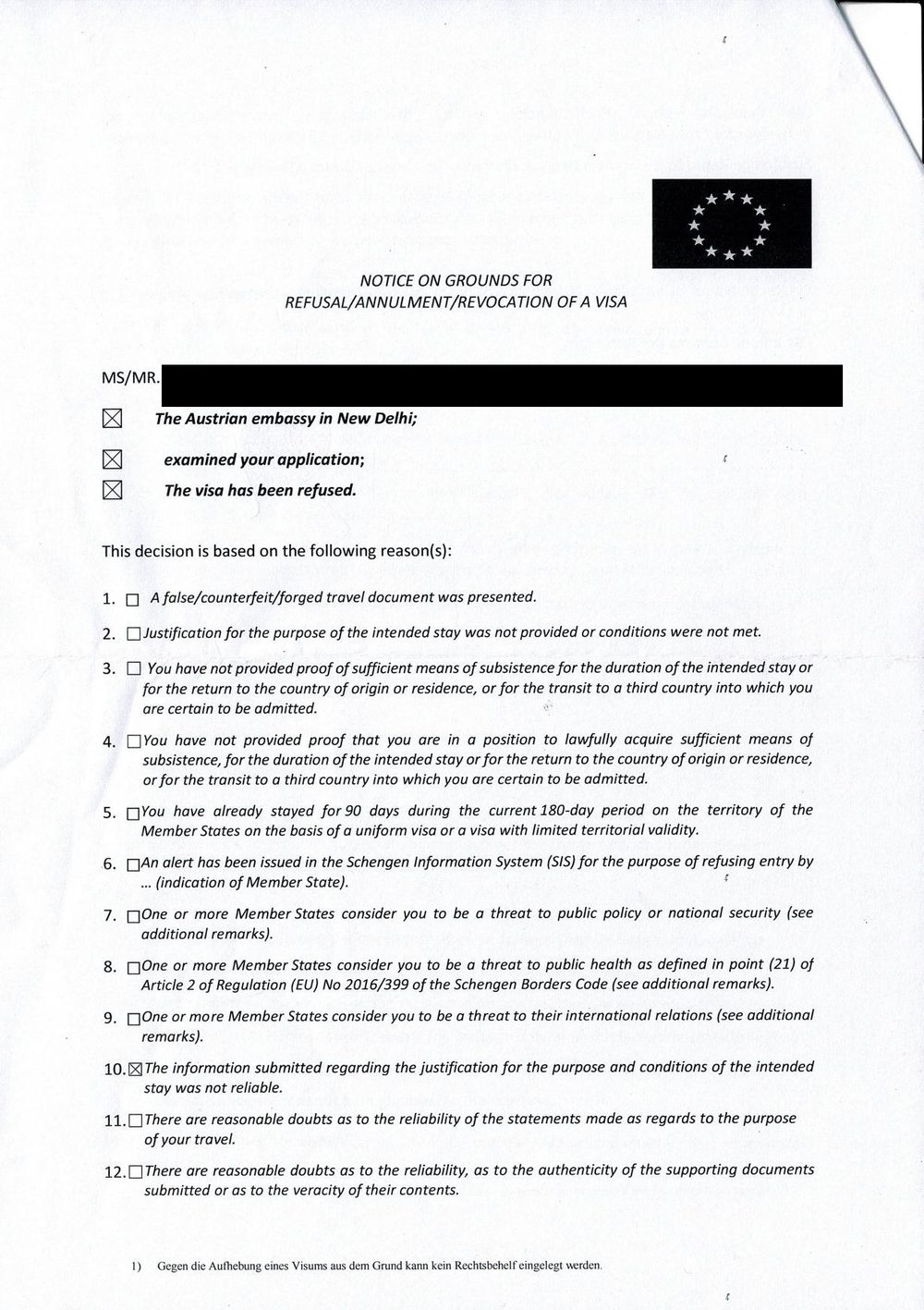
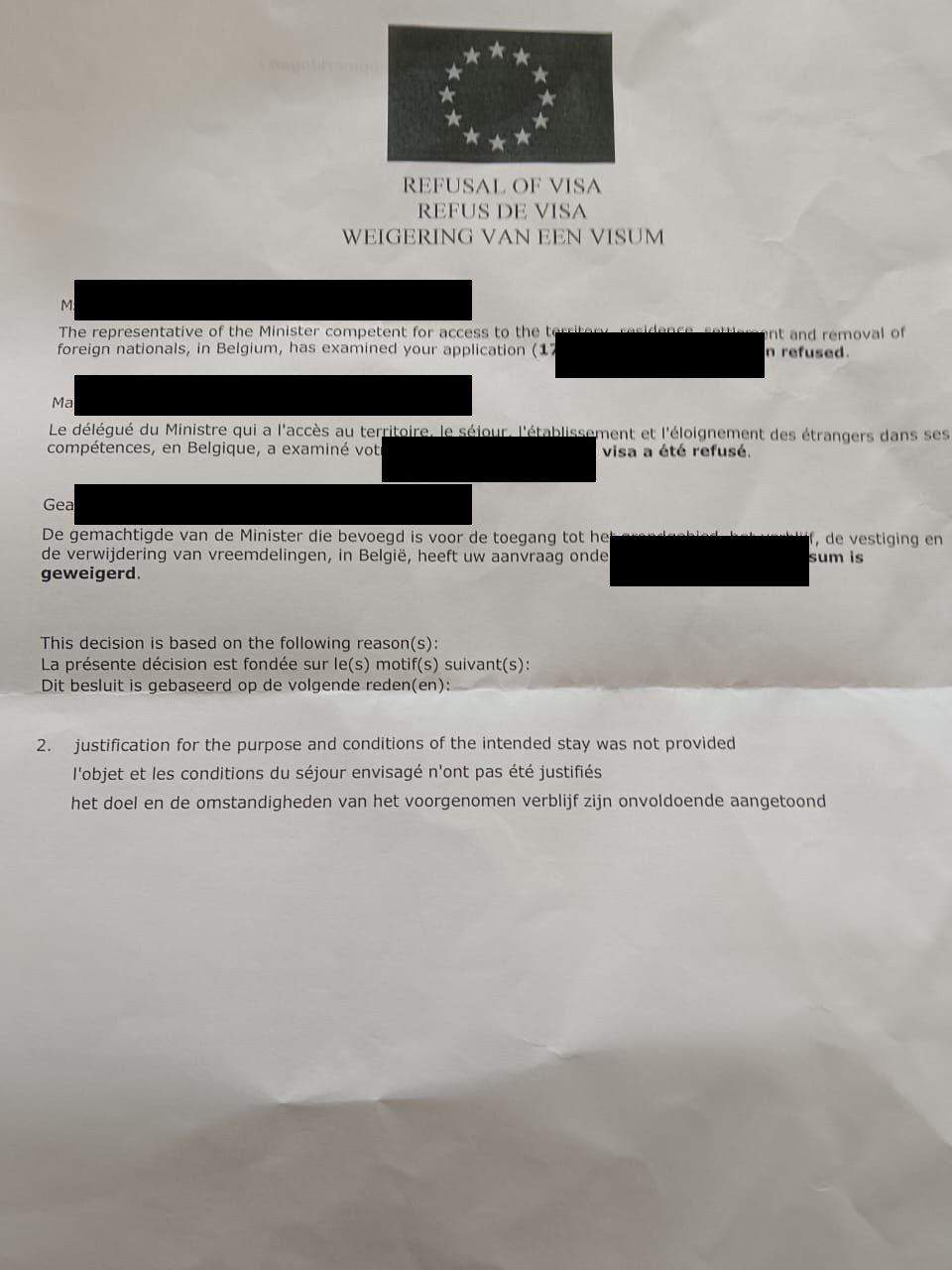
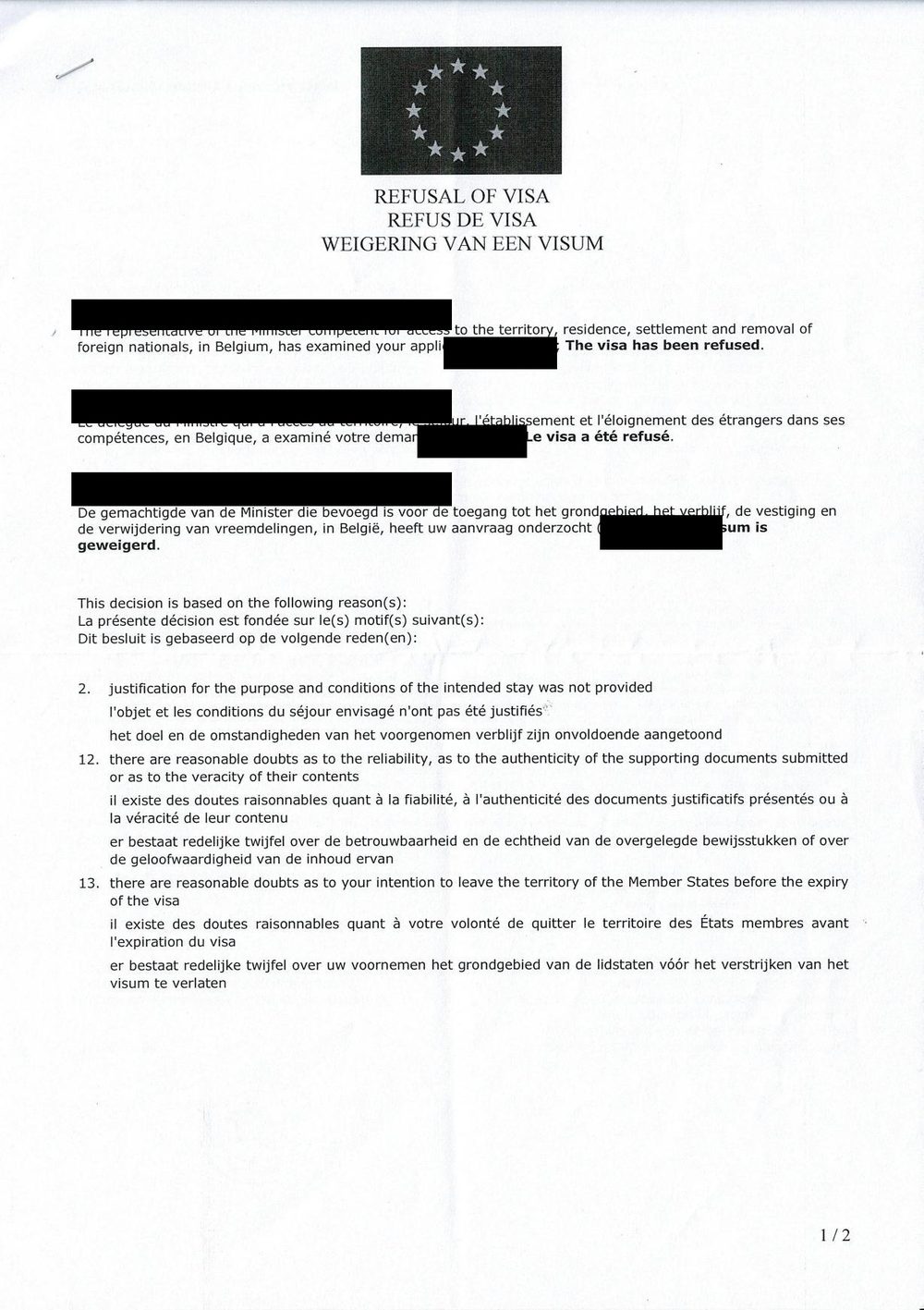
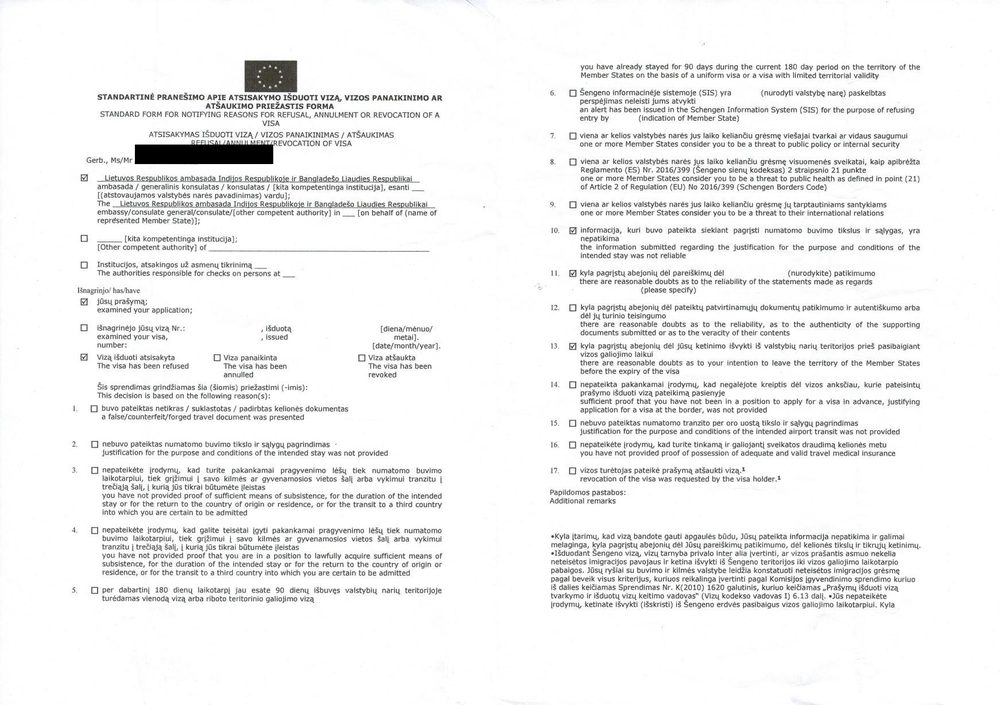
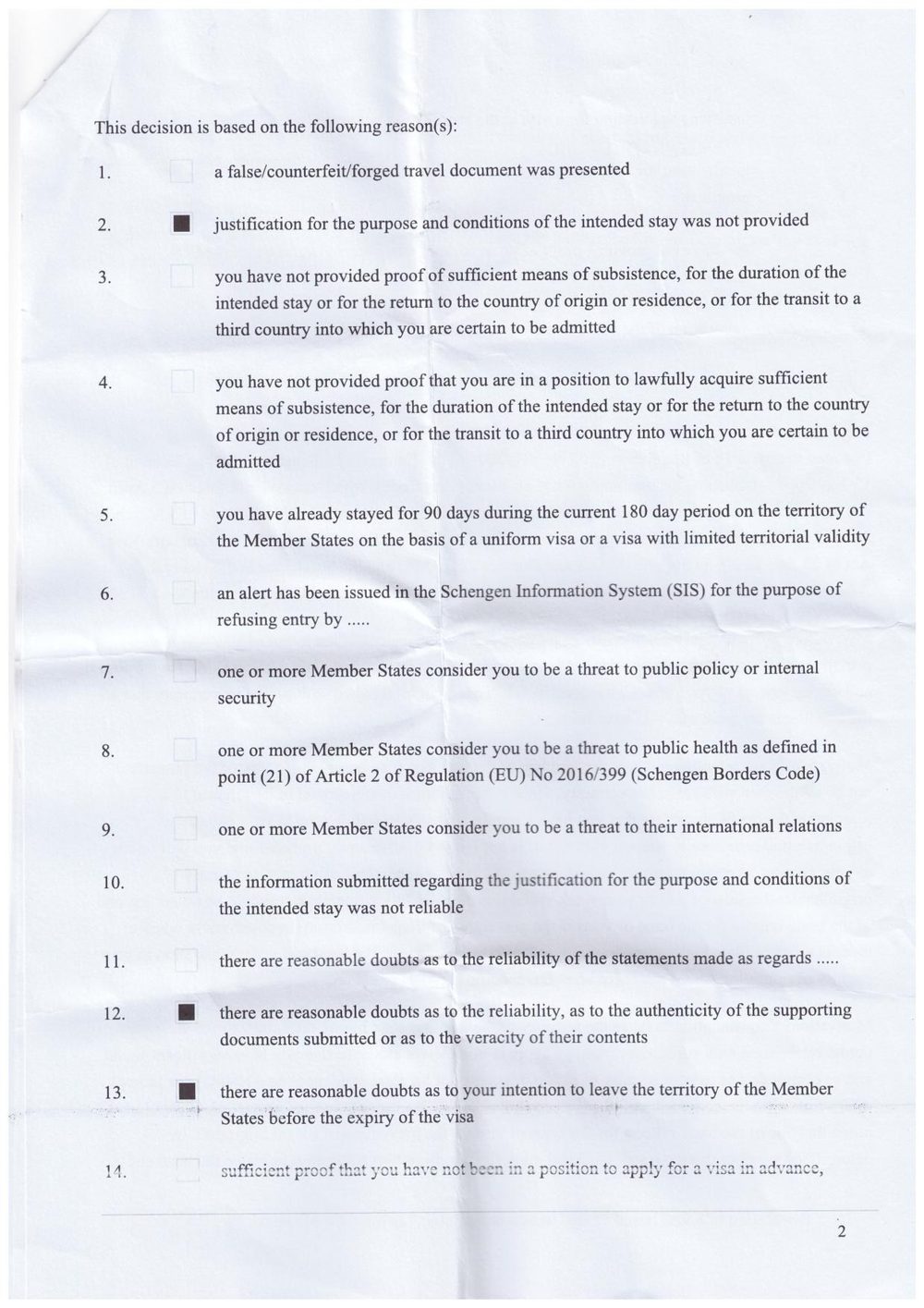
What "Article 32" actually means
Article 32 of the Schengen Visa Code is the legal section that lists every reason a Schengen Type C visa can be refused. Nine grounds in total, written in dense legalese. The Annex VI form is the operational version of that article — a tickable list of those grounds, with each ground sometimes split into two or three boxes for clarity. That's why the form runs to 12 boxes in Austria, 13 in Belgium, 17 in Lithuania — the same nine legal grounds underneath, expressed at different levels of granularity.
When the consular officer reaches a decision, they don't write a custom letter. They tick a box (or two), sign, stamp, and the form is mailed back to you with your passport. The legal ground in Article 32 that the box traces back to is what governs your appeal — not the box number on your specific country's form.
The number nobody told you: five years in the VIS
Here is the part that's easy to miss in the panic of a refusal. Every Schengen visa decision — approved, refused, annulled, or revoked — is logged in the Visa Information System (VIS), a central EU database governed by Regulation 767/2008. VIS data is retained for five years from the date of the decision. Every Schengen consulate, in every Member State, can pull your record up in under a second.
What this means in practice:
- Switching countries doesn't reset the clock. Refused by Germany? When you next apply to France, the French officer sees the German refusal, the boxes that were ticked, and any "reliability" concerns flagged.
- Hiding a prior refusal is the worst move you can make. The application form asks if you've ever been refused. If you say no and the system shows yes, that's an automatic Article 32(8) — "information regarding the justification is not reliable." That's a far harder refusal to recover from than the original.
- Pattern matters. Officers don't just see the tick boxes; they see the whole timeline. Three refusals in two years from three different countries reads very differently from one isolated refusal followed by a careful, documented reapplication.
This is why the strategy after a Schengen refusal is not "try a different country." The strategy is "fix what they actually flagged, document the fix, and reapply with a clean, complete file that addresses the prior refusal head-on."
The 9 Article 32 boxes, decoded
These are listed in the order they appear on Annex VI. For each, we explain what the box says, what it really means in practice, the kind of applicant it tends to hit, and the fix that works.
Travel document presented is false, counterfeit or forged
What it really means: the consular officer believes something about your passport — or a stamp, visa, or page in it — is fake or tampered with. This is the rarest box in the form, but the most damaging when it lands. It can also be triggered by less obvious things: a dual passport you didn't disclose, a country stamp that doesn't match the entry/exit pattern, or a previous "lost passport" replacement that the officer suspects was used to hide a deportation.
Justification for the purpose and conditions of the intended stay was not provided
What it really means: "Your story doesn't add up." This is one of the three most-ticked boxes for Indian applicants. The officer didn't see a clear reason for this trip, to this country, on these specific dates. Vague itineraries, missing hotel bookings, no return flight reservation, generic invitation letters — all feed this box. So does an itinerary that visits four countries in five days with no logical sequence.
- Build a day-by-day itinerary with dates, cities, hotels, and inter-city travel
- One main destination that matches the consulate you're applying through (a Germany visa for someone whose itinerary is 90% France will be refused on the spot — that's the "main destination" rule)
- Confirmed hotel reservations for every night of the stay
- Return flight reservation with dates inside the visa validity
- A cover letter that explains the trip's purpose, why now, and what you'll do each day
Sufficient means of subsistence not provided — for stay or return
What it really means: the officer doesn't believe you can fund the trip. Not necessarily that you don't have the money — that the money you've shown isn't credibly yours, or isn't enough for the itinerary you submitted. Schengen consulates use a per-day minimum (varies by country: Germany around €45/day, France €65/day if you have hotel proof, Italy roughly €45–90/day). If your bank balance divided by trip days is below the threshold, this box gets ticked automatically.
- 6 months of organic banking activity — salary credits, normal spending, steady savings
- If a recent lump-sum deposit is unavoidable, document the source (FD maturity certificate, property sale deed, gift affidavit with PAN of donor)
- Attach ITRs of the last 2–3 years — the single most powerful financial document for an Indian applicant
- For self-employed and business owners, add GST returns, audited financials, and business bank statements
- Show more than the minimum — aim for 1.5× the per-day threshold across the trip
Already stayed 90 days during the current 180-day period
What it really means: you've already used your full Schengen entitlement in the rolling 180-day window, and you're asking for more. This box catches frequent travellers — consultants, business visitors, family-circuit travellers who don't track the 90/180 rule precisely.
Alert issued in SIS for refusal of entry
What it really means: a Schengen Member State has flagged you in the Schengen Information System (SIS) — the EU's law-enforcement and entry-refusal database. Common triggers: previous overstay (even by a day), being deported from a Schengen country, an outstanding criminal matter in any Member State, or being mistakenly matched to someone else with similar identifiers.
Considered a threat to public policy, internal security, public health, or international relations
What it really means: serious security or public-order concern, or a national database flag the officer doesn't have to disclose. This is rare for typical tourist applicants. When it lands, it usually traces back to a criminal record, a sanctions list match, or in unusual cases an immigration enforcement note shared between Member States.
Travel medical insurance not provided or not valid
What it really means: the insurance you submitted does not meet Schengen requirements. The minimum is €30,000 coverage, valid in all Schengen countries, covering repatriation and emergency medical care, for the full duration of stay. Indian applicants frequently submit policies that fail one of these four conditions — usually because they bought a cheaper "domestic-only" or "single-country" policy by mistake.
Information regarding justification is not reliable
What it really means: the officer found something in your file that contradicts something else — or contradicts what they could verify externally. This is the box ticked when documents look manipulated, when a bank statement's running balance doesn't match the deposits, when an employer's NOC is on a letterhead that doesn't match their registered office, when an invitation letter's "host" turns out not to live at the declared address. It's also the box ticked when you fail to disclose a prior refusal that VIS already knows about.
- Disclose every prior refusal truthfully on every application form, every time
- Order any GCMS-equivalent notes available (some Member States provide reasoning on written request)
- Identify the specific document the officer doubted, and replace it with one that can be independently verified (registered company letterhead, audited statements, notarised deeds)
- Add a signed cover letter from your case-handling team explaining each previously-doubted document and how it has now been verified
Intention to leave before expiry of the visa cannot be ascertained
What it really means: "We don't believe you'll come back." This is the single most-ticked box on Indian Schengen refusals. The officer has decided your ties to India are not strong enough to guarantee your return. First-time travellers, single applicants, people with most family settled abroad, freelancers without long contracts, very recent job changes — all weigh against you here.
- Documented economic ties: long employment with NOC, business ownership with GST trail, property in your name
- Documented family ties: spouse in India, dependent parents, school-going children
- Documented social ties: long-term rental, ongoing studies of dependents, community role
- For first-time travellers: build a record on a non-Schengen visa first — UAE, Thailand, Singapore, or a UK visit visa — and let one or two clean returns build credibility before applying for Schengen
- A cover letter that ties this together explicitly: every reason you must come back, with the document number that proves it
Got a refusal letter in front of you?
Read the boxes that are ticked. Send us the photo. We'll tell you, on the call, exactly what each tick means for your specific case — and whether to appeal or reapply.
Appeal or reapply? The decision that defines your next 5 years
Once you know which boxes are ticked, you have two paths: appeal the refusal in the issuing country, or reapply with a corrected file. They are not equal. The wrong choice can cost you a year of waiting, several lakhs of legal fees, and end with the same outcome.
⚖️ Appeal — when it makes sense
- The officer ignored evidence you clearly provided
- The refusal contradicts the documents on file
- You believe the SIS or VIS data is wrong
- You want the refusal itself overturned (not a fresh approval)
- You can file in the consulate's official language, in their country, within 15–60 days
📝 Reapply — when it makes sense
- You missed or under-documented something the officer correctly flagged
- You can fix the actual issue with new documents
- You need to travel within months, not a year+
- Boxes 2, 3, 7, or 9 are ticked — these are almost always faster to fix and refile
- You want the next decision in 15–30 days, not the next decision-cycle of an appeal court
For most Indian applicants, reapplying is the right move. Appeals are slow, expensive, and only reverse the original decision — they don't grant a new visa. Reapplications can fix the underlying issue and put you on a flight in weeks instead of months. But the choice depends on which boxes were ticked and what you can document.
Country-by-country appeal deadlines (2026)
If you do appeal, the deadline is set by the Member State that refused you. Miss it by a day and your right to appeal lapses. These are the typical windows in 2026 — always confirm with the consulate's current notice attached to your refusal letter:
| Country | Appeal Deadline | Where Filed | Language |
|---|---|---|---|
| Germany | 1 month | Administrative court (Verwaltungsgericht), Berlin | German |
| France | 30 days (CRRV) / 60 days (court) | CRRV in Nantes, then Nantes Admin Court | French |
| Italy | 60 days | Lazio Regional Administrative Court (TAR Lazio) | Italian |
| Netherlands | 4 weeks | IND objection then district court | Dutch |
| Spain | 1 month (admin) / 2 months (court) | Consulate, then Madrid High Court | Spanish |
| Switzerland | 30 days | State Secretariat for Migration (SEM), Bern | German / French / Italian |
| Denmark | 4 weeks | Immigration Appeals Board | Danish |
| Austria | 4 weeks | Federal Administrative Court (BVwG) | German |
| Czech Republic | 15 days | Ministry of Foreign Affairs | Czech |
| Belgium | 30 days | Council for Alien Law Litigation (RvV) | Dutch / French |
How we handle a refused Schengen file
Refusal recovery is its own discipline, separate from filing a fresh application. When a refused case lands with us, this is the sequence:
Read the boxes
Photograph of the Annex VI form. We confirm exactly which boxes are ticked — not what the cover paragraph implies, but the legal grounds.
Map the file
We compare what was submitted against what the boxes call out. Where was the gap? What did the officer see, and what did they not see?
Check VIS exposure
How long ago was the refusal? What other Schengen activity is on your record? This shapes whether to reapply to the same country or pivot to a different consulate.
Decide: appeal or reapply
Based on the boxes, the deadline, and the country, we recommend the path that gets you to a visa fastest — not the one that bills the most.
Rebuild documents from scratch
Financials reviewed by Chartered Accountants. Legal documents vetted by lawyers. Cover letter written by the country-specific writing team. New itinerary, new bookings, new sequence.
Address the prior refusal head-on
The new file includes a cover letter that names the previous refusal, explains what was insufficient, and shows what has now changed — document by document.
Submit and track
VFS appointment, biometrics, follow-ups, and direct contact with the case manager until the decision arrives. No silence between submission and outcome.
If refused again, escalate
A second refusal triggers a formal review with senior team members and counsel in the issuing country. Not the end — but it's a different conversation, and we know how to have it.
Frequently asked questions about Schengen visa refusals
Can I reapply for a Schengen visa immediately after refusal?
Yes. There is no mandatory waiting period in the Schengen Visa Code. But reapplying without addressing the boxes that were ticked almost always leads to a second refusal — which is far worse than the first because it's now a pattern in VIS. Get the refusal letter analysed, fix the actual issue, then reapply.
If Germany refused me, can I just apply to France instead?
You can, but it doesn't reset anything. The French consulate sees the German refusal in VIS within seconds. They will read the same boxes that were ticked and ask why they should reach a different conclusion. The strategy isn't "switch country" — it's "fix the documented issue and reapply, addressing the prior refusal directly in the new cover letter."
How long does a Schengen refusal stay on my record?
Five years in the Visa Information System (VIS), per Regulation 767/2008. Every Schengen consulate can see it during that window. After five years, the entry is removed and your record returns to a clean state — but most refusals can be overcome long before then with the right reapplication strategy.
Should I appeal my Schengen refusal or just reapply?
For most Indian applicants, reapplying with a corrected file is faster, cheaper, and more likely to result in a visa. Appeals are best when the consulate clearly ignored or misread evidence, when the SIS/VIS data is wrong, or when you want the refusal itself overturned rather than a new visa. Appeal deadlines are tight (15–60 days depending on country) and require local language and counsel.
Will a Schengen refusal affect my US, UK, or Canada visa applications?
It can. The US DS-160, UK online form, and Canada IMM 5257 all ask whether you have ever been refused a visa by any country. You must answer yes. Concealing the Schengen refusal is far more damaging than disclosing it — it triggers immediate misrepresentation findings on those applications. We help clients frame past Schengen refusals correctly in subsequent US/UK/Canada applications.
How much money should I show for a Schengen visa from India?
It depends on the country and the trip duration, but a working baseline is €50–65 per person per day of stay, plus flights and accommodation. For a 14-day Schengen trip, that's roughly ₹5–7 lakh in stable, organic, well-documented funds. The exact threshold per country is published by the consulate — but showing only the minimum is rarely enough; aim for 1.5× the threshold.
What does the "main destination" rule mean for Schengen?
You must apply at the consulate of the country where you will spend the most days of your trip. If you'll spend 8 days in France and 3 in Germany, you apply to France — not Germany. Applying to the wrong country is a fast track to Article 32(2): vague purpose. If your stay is equal across countries, apply to the country of first entry.
Can SureShot Visa help if I've already been refused twice?
Yes. We regularly work on cases with two or three prior refusals. The process is more careful, the file is built deeper, and we often recommend a sequencing strategy — building or rebuilding non-Schengen travel history first, addressing each previously-ticked box with new documentation, and applying through the correct main-destination consulate. Approval is never guaranteed, but the difference between a third-time DIY application and a third-time properly-prepared file is dramatic.
How long does Schengen visa processing take in 2026?
Standard processing is 15 calendar days by Visa Code, but in practice many Indian consulates run 20–45 days during peak season (April–August). After a refusal, plan for at least 6–8 weeks before reapplication results, plus prep time. Don't book non-refundable flights before approval — ever.
Is there a guaranteed-approval Schengen visa service?
No. Anyone who guarantees a Schengen visa is misleading you — the decision rests entirely with the consular officer, not with any agent. What an experienced refusal-recovery team can do is read your refusal letter precisely, fix the actual issue, prepare a complete and verifiable file, and dramatically improve your odds. The honest answer is "we maximise your chances," not "we guarantee approval."
Why Schengen refusal recovery is its own specialty
Filing a fresh Schengen visa for someone with a clean profile is paperwork. Recovering a refused Schengen file is a different discipline. It requires reading legal annexes, decoding which box was ticked and why, understanding VIS exposure, knowing each Member State's appeal procedure, and rebuilding the financial, legal, and narrative parts of the file in coordination — not in isolation.
This is why a typical "agent" who treats every Schengen application as the same form often fails on refused cases. The original mistake was missing one of the nine boxes. Without addressing that exact box, the refile invites the same outcome.
At SureShot Visa, refusal recovery is handled by a dedicated team:
- Chartered Accountants who review and rebuild the financial documentation that triggered Article 32(3) or 32(8) refusals
- Legal experts who handle SIS access requests, PCC issues, and Member-State-specific appeal procedures
- Country-specialist writers who craft cover letters tuned to each consulate's reading style — a Germany cover letter is structurally different from a France or Italy one
- Refusal-recovery case managers who own the file from the first photograph of your Annex VI form to the moment your new visa is collected
Your refusal letter has answers in it. Let us read them.
Send us the photograph of your Annex VI refusal form. On the call, we'll tell you exactly which boxes are ticked, what each one means for your case, whether to appeal or reapply, and what it will take to get to a visa. First consultation is free.
Or visit our refusal recovery page to learn more.
Disclaimer: This article is for informational purposes only. The Schengen Visa Code, Article 32 grounds, and Member-State appeal procedures are governed by EU Regulation 810/2009 and related national implementing law — rules, fees, and processing times change. Always verify current requirements on the official consulate website of the country you are applying through, or with the European Commission's Schengen visa portal. Names in stories have been changed to protect client privacy.
Need help?
We'll handle your visa file end-to-end.
Documents, VFS slots, embassy filing — by a licensed consultant.
We answer within 5 minutes

Written by
Sherbir Singh GrewalDirector, Pro Lifeset Overseas Pvt Ltd · B.Tech, Information Technology (2007)
Sherbir Singh Grewal supports applicants across visa-file preparation, document organisation and case coordination. His approach is practical: understand the applicant's real situation first, then build the documents around a consistent, believable story.
Full profileRelated Guides

Which Schengen Country to Apply Through from India
Learn the Schengen main-destination rule and discover which country to apply through from India for your visa application.
Read guide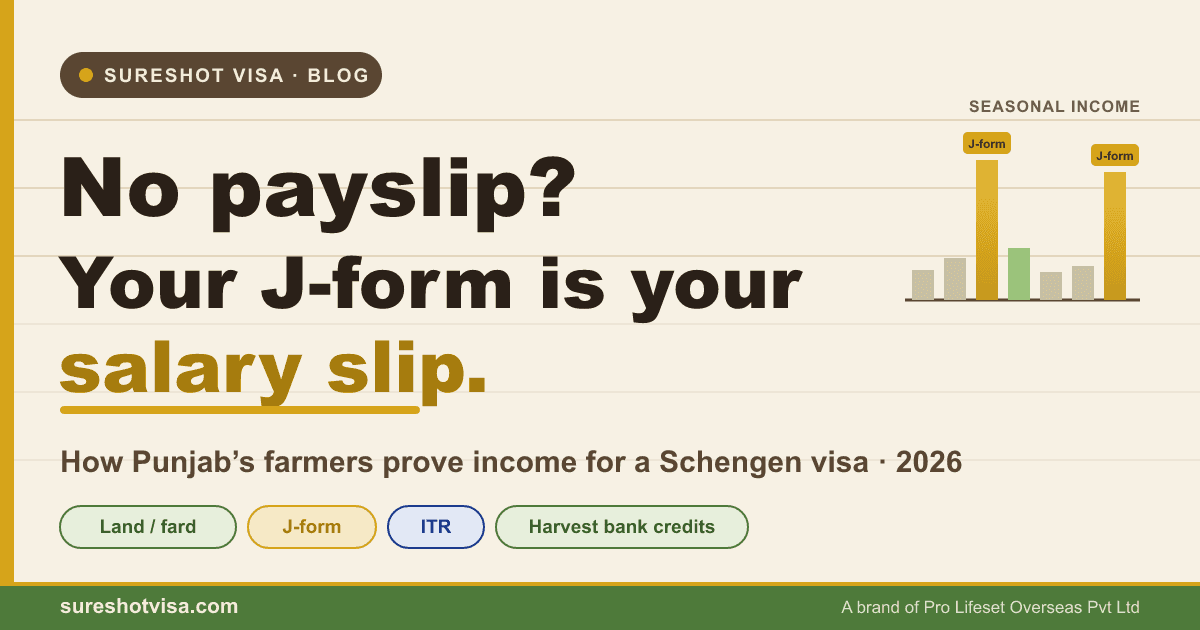
No Salary Slip? How Punjab’s Farmers Prove Income for a Schengen Visa (2026)
A farmer has no salary slip — and still gets the visa. Your J-form, fard, and harvest-season bank credits ARE your income proof. How to build a money story an officer trusts.
Read guide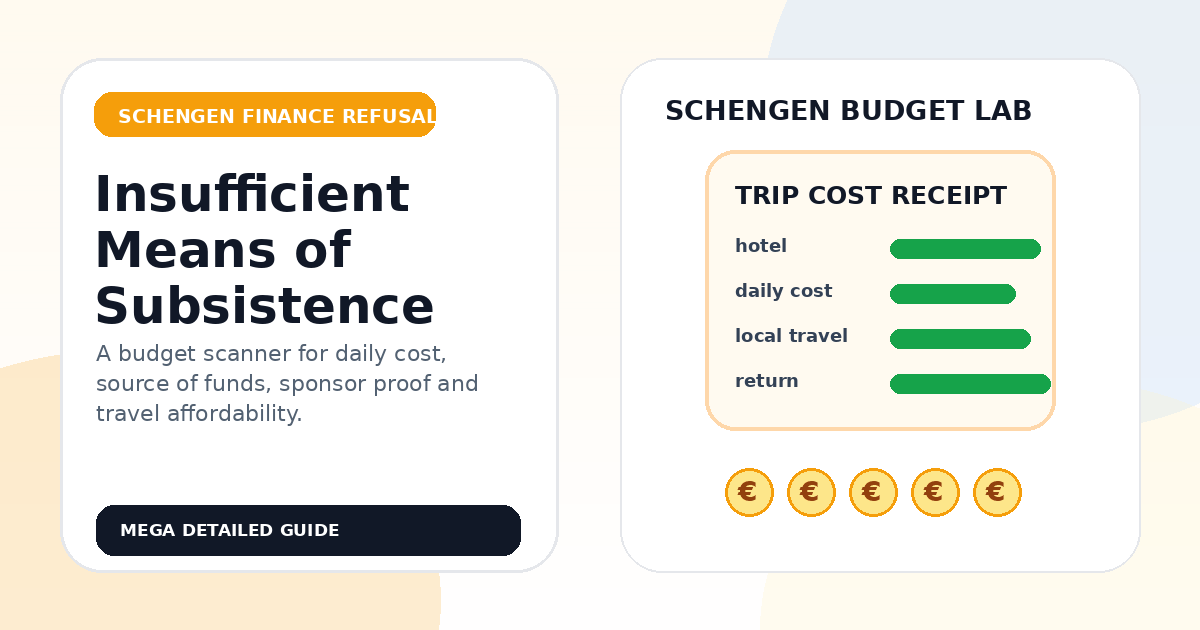
Schengen Visa Refused — Insufficient Means of Subsistence: The Budget Lab
Schengen visa refused for insufficient means? A finance guide for Indians: trip-budget table, bank-statement credibility, sponsor proof, affordability and how to reapply.
Read guide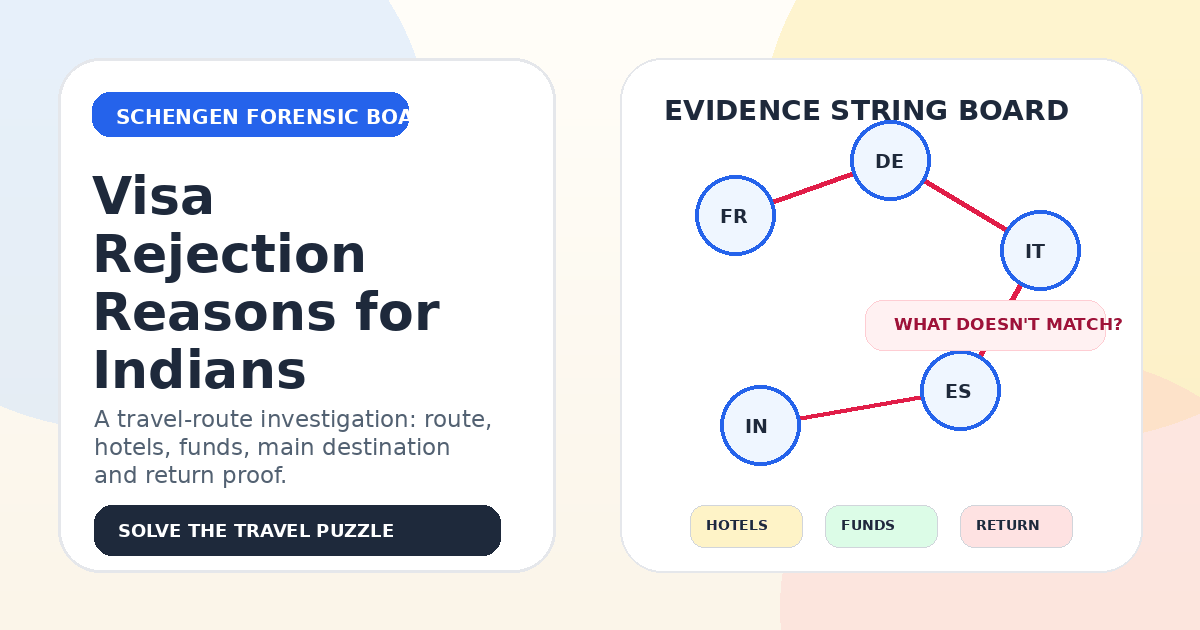
Schengen Visa Rejection Reasons for Indians: The Travel Evidence Board
Schengen visa rejected? A forensic visual guide for Indian applicants — main-destination logic, the refusal-code decoder, hotel-night and funds checks, return proof and a reapply self-audit.
Read guide