Property Papers & Assets for Visa: Complete Guide
Last reviewed: 10 September 2026 · Verified against current VFS Global India fees
Learn which property documents and assets strengthen your visa application. Understand how to prove ties to India with the right paperwork and evidence.


When a visa officer looks at your file, one silent question runs through every page: will this person actually return home? Property papers and asset proofs are one honest way to answer that — but only if you attach the right ones, presented the right way.
Property proof is supporting evidence of ties — never a substitute for a clear travel purpose and honest finances.
Do property papers actually help a visa application?
Yes — but not in the way most applicants imagine. Owning a flat in Ludhiana or agricultural land near Patiala does not "unlock" a visa. What it does is help establish your ties to India: the roots, responsibilities and reasons that make it logical for you to come back after a short trip abroad.
Most visitor and tourist visa refusals — for the UK, USA, Schengen, Canada and Australia — mention "the applicant has not satisfied me they will leave at the end of their stay." Property is one category of evidence that pushes against that doubt. It signals you have something valuable anchored here that you are not walking away from.
Property does not prove intent. It reduces doubt. Officers assess the whole picture — job, family, finances and travel history — and property is one supporting piece of that mosaic.
So treat property papers as a strengthener, not a magic bullet. A weak file with a fat property portfolio still gets refused. A strong, coherent file with modest, well-documented assets often sails through.
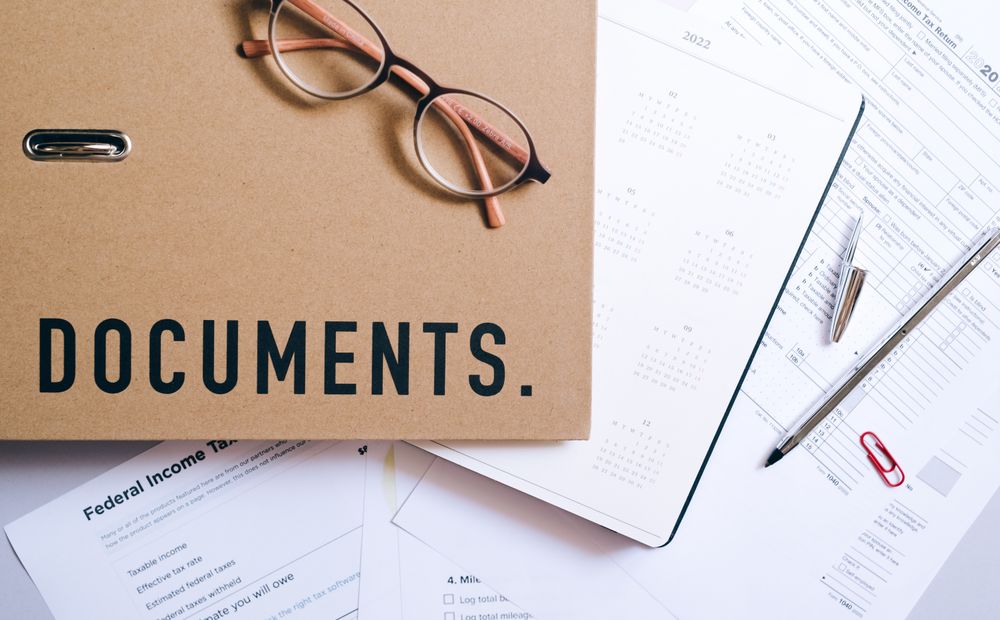
Which property and asset documents to attach
The goal is credibility, not volume. Attaching your entire family's paperwork looks desperate and confuses the reviewer. Pick documents that are in your name, verifiable, and recent.
Strong, officer-friendly documents
- Registered sale deed / conveyance deed — the single most credible proof of ownership.
- Property tax receipts (latest year) — shows the asset is live and maintained by you.
- Jamabandi / Fard (land records) for agricultural land in Punjab — issued by the revenue department, easy to verify.
- Encumbrance certificate — confirms the property is free of major disputes or unpaid loans.
- Municipal / mutation records reflecting your name.
- Rental agreement + rent receipts if the property earns you income — this ties to both assets and ongoing local commitments.
Financial assets worth including
- 6-month bank statements (stamped by the bank) — the backbone of any financial section.
- Fixed deposit receipts — even ₹2-3 lakh in FDs shows liquid stability.
- Provident fund / PPF statement — reflects long-term local commitment.
- Mutual fund / demat holding statement, if any.
- Vehicle registration certificate (RC) — a small but genuine asset in your name.
- Business registration / GST returns if you are self-employed.
What NOT to over-attach
Skip gold valuations, hand-written property "estimates," and unregistered agreements to sell. Officers are trained to spot padding. One clean registered deed beats five vague documents.
| Document | What it proves | Credibility |
|---|---|---|
| Registered sale deed | Legal ownership | Very high |
| Jamabandi / Fard | Land ownership (Punjab) | Very high |
| Property tax receipt | Active, maintained asset | High |
| Encumbrance certificate | Dispute/loan-free status | High |
| Rent agreement + receipts | Ongoing local income | High |
| Unregistered "agreement to sell" | Almost nothing legally | Low |
| Gold/jewellery valuation | Movable, easily hidden | Low |
Property Documents Impact on Visa Approval
Relative importance of asset types in demonstrating India ties
Strongest proof of financial roots and commitment
Liquid assets showing sustained financial stability
Moderate weight as secondary asset proof
Demonstrates long-term financial planning locally
Strong indicator of economic ties and employment
Source: SureshotVisa consultant desk
How to actually show "ties to India"
"Ties to India" is officer shorthand for: reasons you must come back. These fall into three buckets. Property sits inside the "economic ties" bucket — but a file that only has property, with no job letter or family anchors, still looks thin.
Economic ties
Job with leave-approval letter, business ownership, property, FDs, rental income. Show you have an income stream and assets waiting for you here.
Family & social ties
Spouse, children, dependent parents, joint family responsibilities. A dependant staying back in India is a powerful, honest tie.
Travel logic
A clear, short, funded purpose with return flight logic. Assets support this only when the trip itself makes sense.
The trick is to make these ties connect. For example: you own a shop (property + business), your children study in a local school (family), and you are travelling for a 12-day holiday fully funded by your savings (travel logic). Now the property is not floating in isolation — it is part of a life you clearly return to.
Five steps to present property proof correctly
Verify ownership is current
Ensure mutation is done and the property is genuinely in your name. If it's in a parent's name, don't claim it as yours.
Get recent copies
Pull the latest tax receipt and a fresh encumbrance/Fard. Documents older than a year look stale.
Translate if needed
Regional-language deeds may need a certified English translation for UK/Schengen files.
Add a one-line index
A cover sheet listing each document helps a busy officer find things in seconds.
Reference it in your cover letter
Mention key assets in one sentence so the officer knows to look — don't make them hunt.
Good vs bad ways to attach assets
Avoid
- Dumping 40 pages of unrelated family property.
- Unregistered or hand-signed "estimates" of value.
- Claiming property that isn't legally yours.
- Suddenly depositing ₹8 lakh a week before applying.
- Photocopies that are blurry or partly cut off.
Do this
- 3-5 clean documents in your own name.
- Registered deeds + latest tax receipts.
- A 6-month bank statement with steady balance.
- Clear, dated, stamped copies.
- A short cover letter tying assets to your return.
A note on money "seasoning"
Officers dislike money that appears out of nowhere. A large lump sum landing in your account just before applying looks like borrowed "show money." If you have genuine savings, keep them stable across the full 6-month statement. If you sold property or received a gift, keep the deed or gift declaration ready to explain the source honestly.
A steady balance of ₹3-4 lakh held for six months is far more convincing than ₹20 lakh that appeared last Tuesday.

Common mistakes that quietly sink files
Treating property as a guarantee. Applicants relax on job proof and travel logic because they own land. The officer weighs the whole file — and refuses the gaps.
Attaching assets not in your name. Your father's farmland doesn't count as your economic tie unless you're a legal co-owner. Claim only what's yours.
Over-documenting. A 90-page file signals anxiety, not strength. Officers spend a short time per case — make it easy.
Ignoring translations. A Punjabi or Hindi deed with no English version may simply be set aside as unreadable.
Mismatched numbers. Property value stated in the cover letter doesn't match the deed. Inconsistencies trigger doubt across the entire file.
Forgetting the family angle. Property without mentioning dependants staying back misses the strongest, most human tie of all.
Cover letter template referencing your assets
Use this as a base for a visitor/tourist visa. Adjust names, dates and figures to your real situation — never exaggerate.
To: The Visa Officer
[Embassy / Consulate Name]

Subject: Application for a Visitor Visa — [Full Name], Passport No. [XXXXXXX]

Respected Sir/Madam,

I am applying for a [country] visitor visa to travel from
[DD-MM-YYYY] to [DD-MM-YYYY] for the purpose of [tourism /
family visit]. I confirm this is a short trip and I will return
to India before my visa expires.

Purpose & duration:
I intend to stay for [XX] days and have booked a return flight
on [DD-MM-YYYY]. My itinerary is attached.

My ties to India:
- Employment: I work as [designation] at [company] since
  [year]. My approved leave letter is enclosed.
- Family: My spouse and [X] children remain in India during
  my trip; I am responsible for their care.
- Property & assets: I own a residential property at
  [address], registered in my name (Sale Deed No. [XXX],
  dated [DD-MM-YYYY]). Latest property tax receipt and
  encumbrance certificate are enclosed.
- Finances: My savings account shows a stable balance over
  the last six months, along with fixed deposits of
  Rs. [amount]. Statements are attached.

Funding:
This trip is fully funded by my personal savings. I confirm
I will not seek employment or public funds abroad.

I have attached all supporting documents and remain available
for any clarification.

Yours faithfully,
[Full Name]
[Phone] | [Email]
[Date & Place]
Document checklist to attach (keep it lean)
- Passport + previous visas/stamps
- Completed application form + photos
- Cover letter (above)
- Employment/leave letter OR business registration
- 6-month bank statement (bank-stamped)
- Registered sale deed / Jamabandi (in your name)
- Latest property tax receipt + encumbrance certificate
- FD receipts, if any
- Travel itinerary + return flight + hotel/host details
- Family proof (marriage/birth certificates) for family ties
Country-by-country: how much property matters
| Destination | Weight given to property | What matters more |
|---|---|---|
| UK | Moderate | Genuine intent, funds source, credibility of purpose |
| Schengen | Moderate-high | Ties + travel insurance + clear itinerary |
| USA (B1/B2) | Supporting only | Interview answers, strong ties, consistent story |
| Canada | Moderate | Purpose, funds, home-country obligations |
| Australia | Moderate | Genuine temporary entrant intent |
Note the pattern: no country treats property as decisive. For the USA especially, your interview answers and the coherence of your story matter far more than any document you carry to the counter.
The honest bottom line
Property papers and asset proofs are worth including because they quietly build the case that you have a life in India worth returning to. But they work only inside a consistent, honest, well-organised file — real purpose, real funds, real ties. Padding, borrowed show-money, and claiming assets that aren't yours do more harm than help.
If you're unsure which of your documents actually strengthen your application and which are just noise, get a second set of eyes on the full file before you submit. A clean, well-argued application respects the officer's time — and gives your genuine ties the best chance to speak for themselves.
Not sure which papers to attach?
SureshotVisa — a brand of Pro Lifeset Overseas Pvt Ltd, Govt of Punjab licensed, based in Patiala — will review your file and tell you exactly what strengthens it. We help you present your case honestly; we never promise approvals.
Need help?
We'll handle your visa file end-to-end.
Documents, VFS slots, embassy filing — by a licensed consultant.
We answer within 5 minutes

Written by
Rohit GirDocumentation & Financial Profile Support · M.Com (2022)
Rohit Gir supports the team with document review, financial-profile organisation and applicant communication. He helps ensure that income proof, bank statements, business documents, salary records and supporting evidence are presented clearly and consistently.
Full profileRelated Guides

No Objection Certificate (NOC) for a Visa — What It Must Say, and What Ruins It
One page from your employer quietly answers the officer's biggest question: will this person come back? Most NOCs answer the opposite. The four facts it must contain, the layout, and the five things that break it.
Read guide
Does a UK Invitation Letter Need an Apostille? No — Here's What It Actually Needs
There is no UKVI requirement to apostille or notarise a visitor invitation letter, and chasing one costs weeks you may not have. What the letter must contain, when legalisation genuinely applies, and why the letter is not what decides your case.
Read guide
Switzerland Visitor Visa Cost from India 2026 — Every Rupee, Honestly
The €90 fee is the small part. Here is the real all-in cost of a Switzerland Schengen visa from India — and the far larger number that only has to sit in your account, not leave it.
Read guide
Culturally Arranged Marriage Visa for New Zealand — The 2026 Guide for Indian Families
New Zealand has a visa built for arranged marriages, and most families never hear about it. The three-month rule that cuts both ways, the evidence that actually decides your case, and why letters from your own family are not enough.
Read guide