Travel History & Old Passports: Visa Application Guide
Last reviewed: 10 September 2026 · Verified against current VFS Global India fees
Learn how travel history and old passports strengthen visa applications. Discover what to do if you have no previous travel experience or passport records.


When a visa officer opens your file, one of the first questions in their mind is quiet but decisive: can this person be trusted to travel and return? Your travel history and old passports are the single strongest way to answer that question without saying a word.
Why travel history matters more than you think
A visa is essentially a bet. The embassy is betting that you will enter their country, follow the rules, and either leave on time or stay legally. They have no way to read your intentions, so they read your record instead. A passport full of previous visas — used honestly, with clean entry and exit stamps — is proof of good behaviour. It tells the officer that other governments already trusted you, and that you honoured that trust.
This is why two applicants with identical salaries and identical bank balances can get very different outcomes. The one who has travelled to Dubai, Singapore, and Thailand and come back each time looks far safer than the one applying for their very first stamp. History reduces perceived risk, and lower risk means smoother approvals for tougher destinations like Schengen, the UK, Canada, the USA, and Australia.
Your old passport is not junk — it is documentary evidence of a habit of returning home.
What officers actually look for in your travel history
It is not just the number of stamps. The quality and pattern of travel matters more. Here is what a trained visa officer reads between the lines:
- Compliance with visa conditions: Did you leave before your visa expired? Overstays, even short ones, are a serious red flag.
- Type of destinations: Travel to developed, "high-value" countries (UK, USA, Schengen, Canada, Australia, Japan) counts more than nearby leisure spots, though every genuine trip helps.
- Purpose consistency: A businessperson with business trips, or a tourist with holiday trips, tells a coherent story.
- Frequency and recency: A trip taken eight years ago helps less than one taken last year.
- Return pattern: Clean exits every single time is the gold standard.
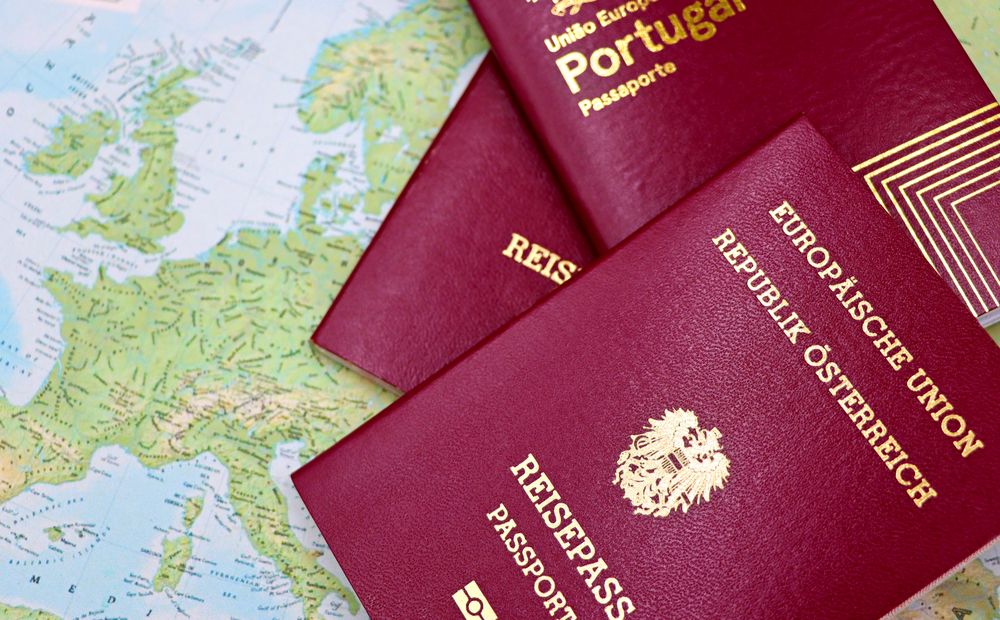
How old passports strengthen a fresh application
When you renew a passport in India, the passport office cancels the old one — usually by clipping a corner or punching holes — and returns it to you. Many people file it away and forget it. That is a mistake. That cancelled passport carries your entire visa history, and embassies routinely ask for it.
Concrete ways old passports help
- They prove past visas you no longer hold physically. If your Schengen or US visa was stamped in a now-expired passport, that page is your evidence.
- They show continuity. A ten-year record of travel across two or three passports demonstrates a stable, long-term pattern of law-abiding movement.
- They validate your declarations. Most application forms ask, "Have you visited this country before?" Your old passport backs up your "Yes."
- They support faster processing. For the US B1/B2 and UK visas especially, prior clean travel can mean shorter interviews and quicker decisions.
Keep every old passport safe, even the ones with clipped corners. To an embassy, that damaged little book is a certified history of your good conduct abroad.
The honest problem: what if you have no travel history at all?
This is the reality for the majority of first-time Indian applicants, and it is not a disqualification. Everyone with a passport full of stamps started with a blank one. The goal is not to fake history — that leads to bans — but to compensate for the absence of history with other strong evidence.
When you cannot show that you have travelled and returned, you must instead prove three things clearly: that you have strong reasons to come back, that you can afford the trip, and that your purpose is genuine. These "ties to home country" become your substitute for a stamped passport.
Travel History Impact on Visa Approval Rates
How previous travel experience influences visa decision outcomes
Significantly higher approval rate shows strong travel credibility
Lower approval odds without established travel patterns
Proof of previous visas greatly strengthens current application
Prior denials create substantial barriers to future approval
Established travelers experience faster visa processing typically
Source: SureshotVisa consultant desk
Building a strong file when you have zero prior travel
Think of it as replacing missing proof with overwhelming proof of everything else. Follow these steps in order.
Pick a friendlier first destination
Start with countries that welcome first-time travellers — Dubai, Thailand, Singapore, Malaysia, or a Schengen country with a clear itinerary. Build stamps before attempting the toughest visas.
Prove strong financial standing
Show 6 months of bank statements with a healthy, steady balance — not a sudden large deposit. Add salary slips, ITRs for 2-3 years, and Form 16.
Document your ties to India
Property papers, a stable job with a leave-sanction letter, a family business, dependent parents or children — anything that proves you have reasons to return.
Build a credible, specific itinerary
Confirmed return flights, hotel bookings, and a day-by-day plan. Vague plans suggest you may not intend to leave.
Write a clear cover letter
Explain who you are, why you are travelling, that this is your first international trip, how you will fund it, and why you will return.
Get expert eyes on the file
A missing document or an inconsistent date can sink an otherwise strong application. A professional review catches these before submission.
Documents that substitute for travel history
Here is a practical breakdown of what to gather, grouped by what each item proves to the officer.
| Document | What it proves | Why it matters without travel history |
|---|---|---|
| 6 months bank statements | Financial capacity | Shows you can fund the trip and will not work illegally |
| ITR for 2-3 years | Stable income | Establishes economic roots in India |
| Employment / leave letter | Job to return to | Strongest single "tie to home" for salaried applicants |
| Property / land papers | Assets in India | Demonstrates you have something valuable to come back to |
| Family documents | Dependents at home | Family responsibilities reduce overstay risk |
| Confirmed itinerary | Genuine purpose | Replaces "pattern of return" with a concrete plan |
| Cover letter | Context | Explains the absence of travel history honestly |
Good file vs weak file
Avoid
- Discarding or losing your cancelled old passports
- A sudden large "parking" deposit right before applying
- Vague travel plans with no return ticket
- Leaving the "previous travel" question blank or lying about it
- Attempting Canada or USA as your very first international trip with thin funds
- Photocopies that are blurry or missing crucial stamped pages
Do this
- Submit all old passports alongside the current one
- Show 6 months of consistent, explainable balances
- Attach confirmed return flights and hotel bookings
- Answer every history question honestly, even if the answer is "none"
- Build stamps on easier visas first, then escalate
- Provide clean, full-page colour scans of every relevant page
Common mistakes that quietly get files rejected
Throwing away old passports. People treat clipped passports as waste. Embassies see them as your travel CV. Never surrender or destroy them.
Hiding a past overstay or refusal. Refusals and overstays are recorded and often shared between countries. Hiding them turns a manageable problem into a credibility disaster. Disclose and explain instead.
Faking travel history. Fake stamps or forged visas lead to long bans and blacklisting. No trip is worth this risk.
Overreaching on the first application. Applying for a US or Schengen visa with zero history, weak funds, and no ties often ends in refusal — which then hurts future applications.
Ignoring the "ties to home" story. Without travel history, ties are your whole case. A weak, unstructured file signals overstay risk even when finances are fine.
A note on visa refusals and gaps
A previous refusal is not the end. Officers understand that circumstances change. What matters is that you address the reason for the earlier refusal directly — stronger finances, clearer purpose, better documentation — rather than simply reapplying with the same file. Similarly, a long gap in travel (say, after the pandemic years) is normal and rarely counts against you if the rest of your file is solid.
If your old passport shows an overstay from many years ago that has since been regularised, keep any documents proving the resolution. Context nearly always helps more than silence.
A cover-letter template for first-time travellers
Use this as a starting point when you have no travel history. Adjust the details to your own case and keep it honest and specific.
To,
The Visa Officer,
[Embassy / Consulate Name]

Subject: Application for [Tourist / Business] Visa — [Your Full Name], Passport No. [XXXXXXX]

Respected Sir/Madam,

I am [Full Name], a [designation] working at [company] in
[city], India, since [month/year]. I am applying for a
[type] visa to visit [country] from [date] to [date] for the
purpose of [tourism / meeting / conference].

This will be my first international trip, and I would like to
provide full clarity on my background:

1. Purpose: [brief specific purpose, with itinerary attached]
2. Funding: This trip will be funded by me. I enclose 6 months
   of bank statements showing a balance of ₹[amount], along
   with my ITRs for [years] and recent salary slips.
3. Ties to India: I am employed full time (leave sanction
   letter enclosed), own [property/assets], and support
   [family members] who reside in India. I will return to
   resume my duties on [date].

I confirm that all information is true and complete. I fully
intend to comply with all visa conditions and return to India
within the permitted period.

Thank you for considering my application.

Sincerely,
[Full Name]
[Phone] | [Email] | [Date]
Where SureshotVisa fits in
Building a file that speaks for you — especially when you have little or no travel history — is a craft. It is about knowing which documents each embassy weighs most heavily, how to frame ties to home, and how to present a first-timer as a genuine, low-risk traveller. As a brand of Pro Lifeset Overseas Pvt Ltd, a Government of Punjab licensed firm based in Patiala, SureshotVisa helps applicants assemble honest, well-structured files.
We do not and cannot promise approvals — anyone who does is misleading you. What we do is make sure your file is complete, consistent, and presents your genuine case in the strongest possible light, so the officer's decision is based on your real strengths rather than avoidable gaps.
Not sure how your file looks to a visa officer?
Let our team review your documents, travel history, and ties to home — and tell you honestly where you stand before you apply.
Need help?
We'll handle your visa file end-to-end.
Documents, VFS slots, embassy filing — by a licensed consultant.
We answer within 5 minutes

Written by
Paramjit SinghVisa Documentation & Case Support · B.Tech, Computer Science (2007)
Paramjit Singh focuses on the structure behind a strong visa file: the purpose, the supporting documents, the financial explanation and the return-ties logic. He keeps applications organised so the file never looks scattered, incomplete or contradictory.
Full profileRelated Guides

No Objection Certificate (NOC) for a Visa — What It Must Say, and What Ruins It
One page from your employer quietly answers the officer's biggest question: will this person come back? Most NOCs answer the opposite. The four facts it must contain, the layout, and the five things that break it.
Read guide
Does a UK Invitation Letter Need an Apostille? No — Here's What It Actually Needs
There is no UKVI requirement to apostille or notarise a visitor invitation letter, and chasing one costs weeks you may not have. What the letter must contain, when legalisation genuinely applies, and why the letter is not what decides your case.
Read guide
Switzerland Visitor Visa Cost from India 2026 — Every Rupee, Honestly
The €90 fee is the small part. Here is the real all-in cost of a Switzerland Schengen visa from India — and the far larger number that only has to sit in your account, not leave it.
Read guide
Culturally Arranged Marriage Visa for New Zealand — The 2026 Guide for Indian Families
New Zealand has a visa built for arranged marriages, and most families never hear about it. The three-month rule that cuts both ways, the evidence that actually decides your case, and why letters from your own family are not enough.
Read guide