Name Mismatch in Visa Documents: How to Fix It
Last reviewed: 10 September 2026 · Verified against current VFS Global India fees
Learn why name mismatches cause visa refusals and how an affidavit can help. Get practical steps to resolve document discrepancies and approve your application.


One extra letter, a missing surname, or an initial spelled out in full — that is all it takes for a visa officer to raise a query or issue a refusal. A name mismatch across your visa documents is one of the most common and most fixable reasons applications get stuck, yet thousands of Indian applicants lose money and travel dates over it every year.
A mismatch is not fraud — but an unexplained mismatch looks like a red flag to any embassy.
Why a small name difference becomes a big problem
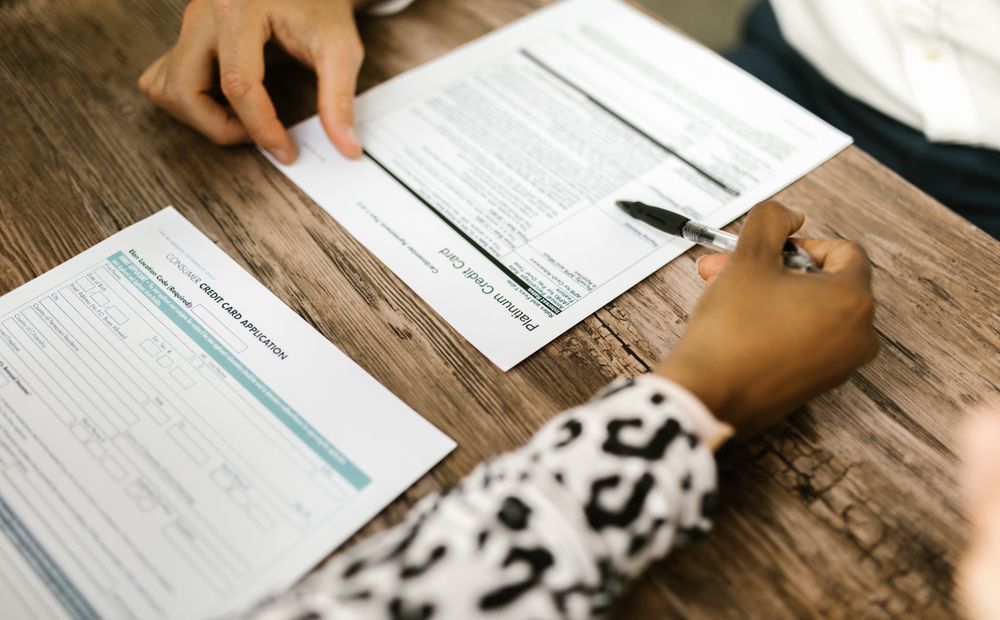
Visa officers assess one core question: is the person in front of these documents the same person applying to travel? Every document you submit — passport, PAN card, degree certificate, bank statement, marriage certificate, salary slips — is a piece of evidence tying you to one identity. When your name appears differently across these papers, the officer can no longer make that link cleanly.
In India, name inconsistencies are extremely common and usually innocent. Schools abbreviate the father's name into an initial. Banks drop the middle name. A woman's passport still shows her maiden name while her offer letter uses her married name. None of this is dishonesty — but an embassy in Delhi, Chennai or Mumbai does not know your family history. They only see what is on paper.
An officer will rarely refuse you for a mismatch alone. They refuse when the mismatch is unexplained — because an unexplained gap in identity documents is exactly what a fraudulent application would produce.

The usual ways Indian names go out of sync
Expanded vs abbreviated initials. Your passport reads "R. Kumar Sharma" while your degree says "Rajesh Kumar Sharma". The expansion is correct, but nothing on paper proves R = Rajesh.
Surname in the given-name field. Many South Indian passports place the full name in "Given Names" and leave "Surname" blank, which foreign systems handle differently from northern-style split names.
Maiden vs married name. Passport shows the maiden name; PAN, offer letter or bank account shows the married name after marriage.
Spelling variants. Sanjay vs Sanjai, Mohd vs Mohammed, Kaur vs Kour, Reddy vs Reddi — phonetic transliterations that drifted across the years.
Father's name mixed in. Older SSC and college records sometimes stitch the father's name into yours, producing a name that appears nowhere else.
Middle name dropped. The passport carries the full three-part name; the salary slip and bank statement drop the middle name to save space.
Which documents actually need to match
You do not need every single paper to be identical — that is not realistic in India. But the core identity chain must either match or be bridged with an explanation. Here is how the documents rank in importance.
| Document | Match priority | Why it matters |
|---|---|---|
| Passport | Anchor | This is the master. Every other document is compared against it. |
| Visa application form | Critical | Must match the passport exactly, letter for letter. |
| Financial proof (bank, ITR, PAN) | High | Ownership of funds must clearly be yours. |
| Employment / offer letter | High | Confirms your ties and purpose of travel. |
| Academic certificates | Medium | Historical documents; minor differences are expected but should be explained. |
| Marriage / birth certificate | Situational | Often the very document that bridges a maiden-to-married name change. |
The golden rule: the passport is the truth. Wherever there is a difference, you are proving that the other document belongs to the same person as the passport — never the other way round.
Name Mismatch: Impact on Visa Processing
Common consequences and resolution timelines for applicants
Leading cause of document-related rejections
Average delay to resolve and resubmit corrected docs
Typical expense for official name correction
Success rate without needing full reapplication
Preventable rejections through document review
Source: SureshotVisa consultant desk
The fix: a one-and-the-same-person affidavit
For most name mismatches, the cleanest, cheapest and fastest solution is a sworn affidavit — often called a "One and the Same Person" affidavit or a "Name Discrepancy" affidavit. It is a legal declaration stating that the different names appearing on your documents all refer to you, a single person.
This affidavit is prepared on non-judicial stamp paper (₹10–₹100 face value depending on your state), signed before a Notary Public or Oath Commissioner, and stamped. In Punjab, a notarised affidavit of this kind typically costs between ₹100 and ₹500 all-in including stamp paper and the notary fee, and can be ready the same day or within 1–3 working days.
When an affidavit is enough — and when it is not
Affidavit alone won't cut it
- Your passport itself has the wrong spelling — you must correct the passport first.
- The name change is legal (marriage, deed poll) and needs a certificate, not just a declaration.
- The mismatch is on the visa form you filled — simply fix the form to match the passport.
- A country's specific rules demand a gazette notification (some require this for major changes).
Affidavit is the right tool
- Initial expanded on one doc, abbreviated on another.
- Middle name present on some documents, absent on others.
- Minor spelling variation from old academic records.
- Maiden name on some papers, married name on others (paired with your marriage certificate).
Step-by-step: fixing the mismatch before you apply
Audit every document
Lay out passport, PAN, bank statements, ITR, offer letter, and certificates. Write down exactly how your name appears on each, punctuation included.
Fix the form first
Ensure your visa application form matches your passport character-for-character. This costs nothing and eliminates the most common self-inflicted mismatch.
Decide affidavit vs correction
If the difference is a variant or missing part, an affidavit works. If a document is genuinely wrong, get it reissued or corrected at source.
Draft and notarise the affidavit
List every name variant and the exact documents each appears on. Sign before a Notary in your city and get the stamp.
Attach the bridging evidence
Pair the affidavit with supporting proof — marriage certificate for a surname change, or Aadhaar/PAN showing both forms if available.
Submit together, clearly labelled
Place the affidavit right alongside the documents it explains, so the officer connects the dots without effort.
A copy-paste affidavit template
Below is a standard structure used for a One and the Same Person affidavit. Print it on stamp paper of the value applicable in your state, fill the bracketed fields, and get it notarised. Always show a draft to your consultant or notary before finalising — wording can be tightened for your exact situation.
AFFIDAVIT

I, [FULL NAME AS PER PASSPORT], son/daughter/wife of
[FATHER'S/HUSBAND'S NAME], aged [AGE] years, resident of
[FULL RESIDENTIAL ADDRESS], holder of Indian Passport No.
[PASSPORT NUMBER], do hereby solemnly affirm and declare
as under:

1. That I am a citizen of India and the above particulars
   are true and correct.

2. That in my Passport my name is recorded as
   "[NAME ON PASSPORT]".

3. That in my [DOCUMENT NAME e.g. Degree Certificate] my
   name is recorded as "[NAME ON THAT DOCUMENT]".

4. That in my [DOCUMENT NAME e.g. PAN Card] my name is
   recorded as "[NAME ON THAT DOCUMENT]".

5. That both/all the above names refer to one and the same
   person, i.e. myself, and there is no other person of the
   said names.

6. That the difference in the said names has occurred due to
   [REASON e.g. clerical error / abbreviation of initial /
   marriage] and not with any intention to deceive.

7. That I make this affidavit to declare that I am one and
   the same person for all legal and official purposes,
   including my visa application.

DEPONENT

Verified at [PLACE] on this [DATE], that the contents of the
above affidavit are true and correct to the best of my
knowledge and belief, and nothing material has been
concealed therein.

DEPONENT
What happens when countries have specific rules
An affidavit is widely accepted, but some destinations expect more, and a few will not accept a self-declaration for legal name changes. Treat this as a general guide and always confirm the current rule for your destination and category.
- Schengen countries: Generally accept a notarised affidavit alongside supporting documents for minor discrepancies. A marriage certificate is expected for surname changes.
- United Kingdom: Often prefers documentary evidence such as a marriage certificate or a deed poll for name changes rather than a bare affidavit.
- United States: The DS-160 has dedicated fields for other names used; declare variants there and carry supporting documents to the interview.
- Canada: Explanatory letters and supporting documents are usually requested; a notarised affidavit strengthens the file.
- Australia / New Zealand: Certified copies and, for legal changes, a change-of-name certificate carry the most weight.
The safest approach: fix the source document where you realistically can, and use the affidavit to bridge the differences you cannot practically change.
Mistakes that turn a small mismatch into a refusal
Ignoring it and hoping. Assuming the officer "will understand" is the single costliest gamble. Address the mismatch before you are asked.
Changing the form to match a wrong document. Never edit your application to match a certificate. The application must always mirror the passport.
Submitting a vague affidavit. A generic "my name is spelt differently" line helps no one. Name the exact documents and exact spellings.
Forgetting the marriage certificate. For a maiden-to-married change, the affidavit alone often looks incomplete without the certificate that legally caused the change.
Old, undated affidavits. Some posts expect the affidavit to be recent — reuse an ancient one and it may be questioned.
Not correcting the passport when you should. If the passport itself is wrong, an affidavit is a patch, not a cure — reissue the passport.
Should you correct the passport instead?
If the error lies in the passport itself, no affidavit will fully rescue the file, because the passport is the anchor for every other document. In that case, apply for a re-issue through Passport Seva to correct the name. This takes longer — typically 15–30 working days for normal processing, faster under Tatkal — and costs the standard re-issue fee. It is inconvenient, but a clean passport removes the problem at its root and saves you repeated explanations for years.
A practical rule of thumb: if the mismatch is in a supporting document and your passport is correct, use an affidavit. If the passport is the odd one out, fix the passport.
How SureshotVisa handles name mismatches
At SureshotVisa — the visa brand of Pro Lifeset Overseas Pvt Ltd, a Government of Punjab licensed firm based in Patiala — the first thing we do on any file is a name-consistency audit across all your documents. We catch mismatches before submission, not after a refusal, because fixing it upfront is free while a fresh application after refusal costs you time, fees and a harder second attempt.
We help you decide whether an affidavit is sufficient or whether a document needs correcting at source, we guide the affidavit wording so it names the precise variants, and we ensure it is filed alongside the right supporting evidence. We do not and cannot promise visa approval — no honest consultant can — but we make sure a preventable documentation issue never becomes the reason your file is rejected.
Not sure if your names line up?
Send us your documents and we will flag every mismatch and tell you exactly how to fix it — affidavit, correction, or both.
Need help?
We'll handle your visa file end-to-end.
Documents, VFS slots, embassy filing — by a licensed consultant.
We answer within 5 minutes

Written by
Rohit GirDocumentation & Financial Profile Support · M.Com (2022)
Rohit Gir supports the team with document review, financial-profile organisation and applicant communication. He helps ensure that income proof, bank statements, business documents, salary records and supporting evidence are presented clearly and consistently.
Full profileRelated Guides

No Objection Certificate (NOC) for a Visa — What It Must Say, and What Ruins It
One page from your employer quietly answers the officer's biggest question: will this person come back? Most NOCs answer the opposite. The four facts it must contain, the layout, and the five things that break it.
Read guide
Does a UK Invitation Letter Need an Apostille? No — Here's What It Actually Needs
There is no UKVI requirement to apostille or notarise a visitor invitation letter, and chasing one costs weeks you may not have. What the letter must contain, when legalisation genuinely applies, and why the letter is not what decides your case.
Read guide
Switzerland Visitor Visa Cost from India 2026 — Every Rupee, Honestly
The €90 fee is the small part. Here is the real all-in cost of a Switzerland Schengen visa from India — and the far larger number that only has to sit in your account, not leave it.
Read guide
Culturally Arranged Marriage Visa for New Zealand — The 2026 Guide for Indian Families
New Zealand has a visa built for arranged marriages, and most families never hear about it. The three-month rule that cuts both ways, the evidence that actually decides your case, and why letters from your own family are not enough.
Read guide